

If someone told you there was a free, accessible, easy habit that boosts happiness, reduces stress, supports brain health, and improves emotional resilience, you might expect a complicated wellness routine, an expensive supplement, or hours at the gym.
But one of the best ways to support your mental health is something you already do every day: walking.
No workout clothes required.
No membership.
No athletic ability or equipment needed. Just putting one foot in front of the other.
Millions of people walk daily for transportation, fitness, or fresh air, but many don’t realize how deeply walking affects emotional well-being. Research continues to show that walking doesn’t just benefit the body; it supports the brain and nervous system in powerful ways.
This article explores:
- why walking improves mood scientifically
- how much walking is helpful
- emotional benefits people notice in daily life
- ways to build a consistent walking habit
- tips for busy professionals, parents, or beginners
Let’s start thinking of walking not just as exercise, but as a tool for mental health.
Why Mental Health Habits Felt Complicated
Many people want to feel better emotionally, but wellness advice can often feel overwhelming.
- “meditate 45 minutes daily”
- “train at the gym 5 days a week”
- “avoid stress, sleep more, and eat perfectly”
- “cut out caffeine, alcohol, sugar, screens”
Walking is different. It doesn’t require you to be perfect, super disciplined, or make big changes to your life. You can fit it in during a work break, while walking your dog, or after dinner for some fresh air.
Most importantly, walking doesn’t feel like a treatment. It just feels natural.
What’s Happening in the Brain When You Walk?
People often say that walking helps them feel calm, refreshed, grounded, or clear-headed. There are real biological reasons for this.
1. Walking Reduces Stress Hormones
When you walk, especially outside, your body lowers cortisol levels, the hormone linked to stress, feeling overwhelmed, irritability, and tension. Over time, having less cortisol can help you feel more emotionally balanced.
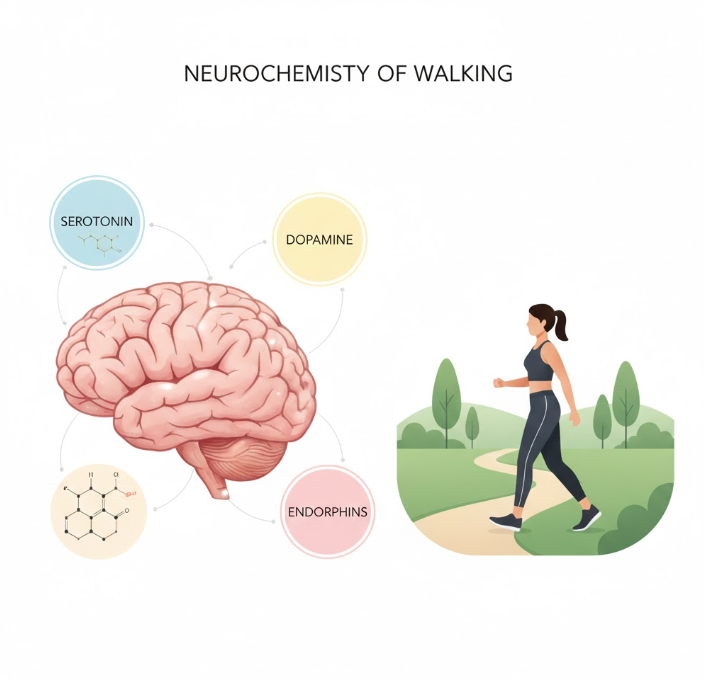
2. It Releases Mood-Boosting Chemicals
Walking stimulates:
- endorphins (natural pain and stress relievers)
- dopamine (motivation and reward)
- serotonin (mood regulation and emotional stability)
These chemicals in your brain help you feel better, more optimistic, and emotionally steady.
3. It Improves Blood Flow to the Brain
Increased circulation helps with:
- focus
- short-term memory
- creativity
- mental clarity
This is why many people come up with their best ideas while walking.
4. Rhythmic Movement Regulates the Nervous System
The steady rhythm of walking is similar to breathing exercises used in therapy. It helps ground your body and can reduce feelings of panic, anger, or being overwhelmed.
Walking is more than just moving your body. It also helps regulate your nervous system.
The Emotional Benefits Most People Notice
Different individuals experience different improvements, but many report:
Reduced Stress and Anxiety: Even a short 10-minute walk can change how your day feels, especially if you do it outside or in nature.
Better Mood and Positivity: Regular walking has been linked to lower rates of depression and improved emotional well-being.
Improved Sleep Quality: Good sleep supports emotional balance, and walking positively influences sleep cycles.
Increased Confidence: Finishing a walk, even a short one, can give you a sense of achievement and help you trust yourself. Small wins are important.
More Social Connection: Walking with a friend, coworker, partner, or pet can help you build stronger relationships, which is important for mental health.
A Sense of Control: Life may feel chaotic, but walking provides structure and a moment to pause, breathe, and reset.
Walking won’t solve every problem, but it can help you handle challenges with a clearer mind.
Indoor vs. Outdoor Walking
Any walking is beneficial, but research shows added emotional benefits from walking outside, especially in:
- parks
- tree-lined neighborhoods
- beaches, lakes, or rivers
- hiking trails
- green city spaces
Nature also helps lower stress and supports mental recovery. But since weather, accessibility, mobility, and safety are different for everyone, walking indoors is still a good option.
Treadmills, indoor tracks, malls, airports, and office hallways can still improve mood, cognition, and stress regulation. The best option would be the one you’ll actually stick with.
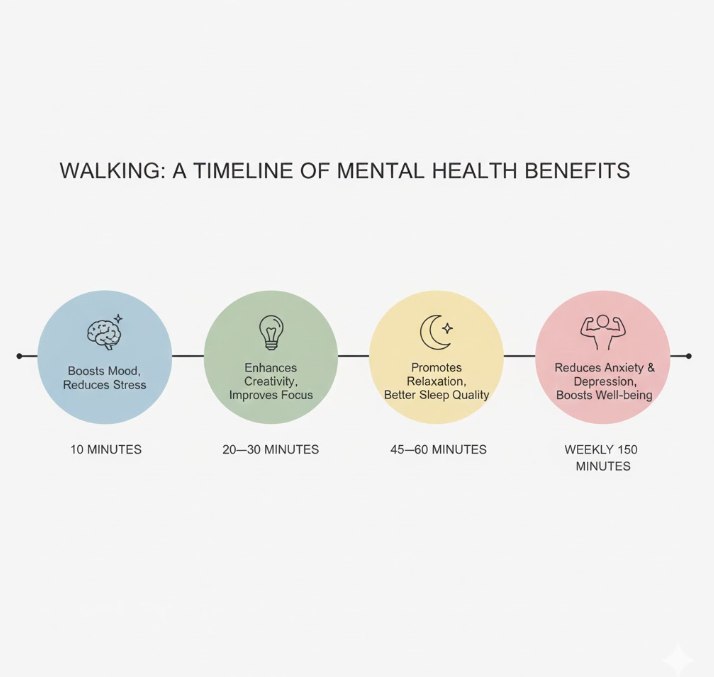
How Much Walking Improves Mood?
There’s no strict rule, and you can start feeling the benefits quickly.
- 10 minutes can reduce stress and lift energy
- 20–30 minutes can improve mood and mental clarity
- 45–60 minutes may support deeper emotional regulation
- Most studies reference 150 minutes weekly, or about 30 minutes, 5 days per week
But something is always better than nothing. Three 10-minute walks count, too. Walking isn’t about being perfect. It’s about being consistent.
Why Walking Feels Mentally Easier Than Other Exercise
Many avoid exercise because it feels intimidating, painful, inaccessible, or time-consuming. But walking:
- doesn’t require fitness experience
- lets you go at your own pace, whether that’s slow, fast, or something in between
- can be part of everyday routines (errands, stairs, chores)
- doesn’t require recovering from soreness
- can be done while talking, listening, thinking, or relaxing
It doesn’t feel like a big project. It’s just movement. That psychological affordability increases follow-through, which is why walking often becomes a long-term habit.
Emotional Benefits of Walking Outdoors
With long work hours, digital overwhelm, and rising stress levels, many people lack time in nature. Daily walking outdoors can:
- reduce rumination (repetitive negative thinking)
- restore attention span
- improve self-esteem
- give you sensory grounding, like fresh air, sunlight, the sound of birds, and the sight of trees
Sunlight exposure also helps regulate circadian rhythm, supporting mood and sleep.
Walking can help people reconnect with their bodies, surroundings, and communities, which is something many of us need but often don’t make time for.
Walking & Mental Health:
Walking is powerful, but realistic expectations matter.
Walking does not:
- replace therapy or medication
- instantly “fix” depression or anxiety
- solve chronic stressors like grief, trauma, or financial hardship
But it can help with treatment, coping, healing, and building emotional resilience, especially as part of a bigger mental health plan.
How to Start a Walking Routine
If you’re new to walking or restarting, these gentle tips will help you ease in.
Start Small
Begin with 5–10 minutes a day. Build gradually.
Pair Walking With Something Enjoyable
- your favorite playlist
- a podcast
- a phone call with a friend
- morning sunlight
Pleasure increases habit retention.
Keep It Flexible
Walk before work, during lunch, after dinner, or multiple short bursts.
Track How You Feel
Not about steps, it’s your emotions.
Ask:
- Did I feel calmer afterward?
- Did I focus better?
- Did my mood improve?
Motivation strengthens when benefits feel personal. Celebrate Consistency Over Distance
If you showed up, you succeeded.
Walking Ideas for Different Lifestyles
Walking looks different for everyone. Here are easy ideas for any lifestyle.
For Remote Workers: Take a 5-minute movement break between meetings.
For Parents: Parents can easily fit movement into their day by walking while their kids are busy scootering, biking, or playing outside.
For Busy Professionals: Try a “walking meeting” instead of sitting in a conference room.
For People Who Get Bored Easily: Change routes like new neighborhoods, parks, or trails.
For Beginners: Start indoors, on flat ground, at a comfortable pace.
There’s no single right way to walk. The best way is the one that works for you.
Final Thoughts
Modern life often pushes us to be productive, fast, and always multitasking. Walking offers something gentler: a chance to be present.
You don’t have to earn it. You don’t have to be good at it. You don’t have to track, measure, or optimize it.
Just walk.
Not for weight loss.
Not for achievement.
Not because you “should.”
Walk because your mind, not just your body, deserves care, fresh air, and space to breathe.
And sometimes, the smallest steps create the biggest emotional shifts.
Sources
- Mayo Clinic — Walking and Stress Relief
https://www.mayoclinic.org/healthy-lifestyle - American Psychological Association — Exercise and Mood
https://www.apa.org/topics/exercise-fitness - Harvard Medical School — Walking and Mental Health Benefits
https://www.health.harvard.edu/mind-and-mood - CDC — Physical Activity Guidelines for Adults
https://www.cdc.gov/physicalactivity - National Institutes of Health — Exercise and Brain Health
https://www.ncbi.nlm.nih.gov
Medical Disclaimer
This article is for educational purposes only and does not replace professional mental health or medical advice. Always consult a licensed healthcare provider, therapist, or physician if you are experiencing ongoing emotional distress, mood changes, anxiety, depression, or other mental health concerns.
The information provided on this blog is not intended to be medical advice and should not be relied upon as such.If you have any medical concerns, please consult with a qualified healthcare professional. We are not responsible for any harm or injury caused by reliance on the information provided.