
Skincare can feel overwhelming for beginners. Walking into any store, you encounter endless shelves of cleansers, toners, serums, moisturizers, and masks, each promising flawless skin. With so many options, it can make it difficult to know where to start, which products to choose, and how to build a routine that is both effective and sustainable.
Understanding the science behind your skin and the purpose of each product is essential for establishing a routine that delivers results. For beginners, a simple, well-structured approach focused on foundational steps is more effective than a complex, multi-product regimen. This guide breaks down the essentials for building a beginner-friendly skincare routine backed by expert guidance.
Why a Simple Skincare Routine Works
Your skin is your body’s largest organ and acts as a shield against things like pollution, germs, and sunlight. Using too many products or harsh ingredients can disrupt this barrier, leading to dryness, irritation, breakouts, or sensitivity.
Research shows that consistency and simplicity are more effective than complicated routines. Focusing on three core steps, such as cleansing, moisturizing, and sun protection, allows the skin to function naturally while building a foundation for healthy skin over time. Overcomplicated routines can lead to irritation, wasted effort, and reduced adherence, making it harder to achieve long-term results.
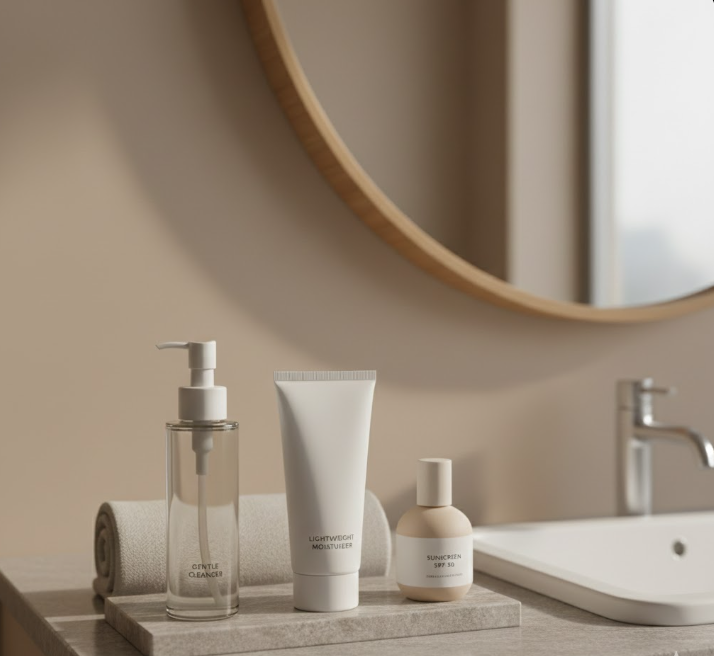
The Three Essential Steps
Experts say beginners can take good care of their skin by following three main steps:
- Cleansing: removes dirt and oil without drying out your skin
- Moisturizing: keeps your skin hydrated and helps protect its barrier
- Sun protection: shields your skin from harmful UV rays
Other products like toners, serums, and masks are optional. It’s best to add them only after you’re comfortable with the basics.
Step 1: Cleanser
Cleansing is always the first step. It removes dirt, sweat, extra oil, and pollution without taking away your skin’s natural moisture. Picking the right cleanser helps your skin get the most out of the next steps.
Considerations for beginners:
- Select a gentle, pH-balanced cleanser (around 5.5)
- Use fragrance-free formulations for sensitive skin.
- Avoid harsh scrubs and irritating foaming agents.
Application guidelines:
- Dry skin: cleanse once daily at night
- Oily skin: cleanse twice daily (morning and night)
- Always use lukewarm water to avoid irritation
Skin type recommendations:
| Skin Types | Product Forms |
| Oily | Gel or foaming |
| Dry | Cream or milk |
| Combination | Gel or lotion |
| Sensitive | Fragrance-free, non-foaming |
The right cleanser leaves your skin clean, balanced, and ready for moisturizer and sunscreen.
Step 2: Moisturizer
Moisturizers help keep your skin’s barrier strong, so it holds in moisture and keeps out irritants. If this barrier is damaged, your skin can get red, dry, sensitive, or age faster.
Key ingredients for beginner-friendly moisturizers:
- Ceramides – support barrier repair
- Hyaluronic acid – attracts and retains moistusre
- Glycerin – helps maintain hydration
- Non-comedogenic formulations – prevent clogged pores
How to apply:
- Use morning and night
- Apply to slightly damp skin to maximize absorption
Consistent use of a moisturizer improves skin texture, resilience, and overall appearance, creating a smooth and healthy base.
Step 3: Sunscreen
Daily sunscreen use is critical for protecting the skin from UV damage, which contributes to premature aging, dark spots, uneven skin tone, and increased risk of skin cancer. For beginners, sunscreen is often the most impactful step in a skincare routine.
Recommendations:
- SPF 30 or higher
- Broad-spectrum protection (UVA + UVB)
- Apply every morning, reapplying when outdoors for extended periods
Types of sunscreen:
| Type | Pros | Cons |
| Mineral Sunscreen | Gentle, suitable for sensitive skin | May leave a white cast |
| Chemical Sunscreen | Lightweight, blends easily | Can irritate sensitive skin |
Even indoor exposure can accumulate UV damage, making daily sunscreen application important regardless of outdoor activity.
Optional Step: Exfoliation
Exfoliation can enhance skin texture, brightness, and clarity, but it is optional for beginners. When incorporated carefully, chemical exfoliants provide visible benefits without damaging the skin barrier.
- AHAs (like glycolic or lactic acid) help brighten skin and smooth texture
- BHAs (like salicylic acid) unclog pores and reduce breakouts
Safety considerations:
- Begin with 1–2 times per week
- Avoid harsh scrubs
- Over-exfoliation can weaken the skin barrier and increase sensitivity
Exfoliation is not a substitute for cleansing, moisturizing, or sunscreen; it is an enhancement step for when the skin is ready.
Morning & Night Routine
Maintaining a consistent routine is the most important factor for beginners.
Morning:
- Cleanser (optional for dry skin)
- Moisturizer
- Sunscreen
Night:
- Cleanser
- Moisturizer
By adhering to this simple structure, beginners can create a sustainable routine that allows the skin to adapt and respond effectively to care.
Common Beginner Mistakes
Even a simple routine can fail if certain errors are made. Common beginner mistakes include:
- Using multiple products simultaneously without understanding their purpose
- Frequently switching brands
- Over-exfoliating
- Skipping sunscreen
- Washing with hot water
- Sleeping with makeup on
Avoiding these mistakes ensures that even a minimal routine produces measurable benefits.
How Long Until Results Appear
Skincare improvements take time, and expectations should be realistic:
- 4–6 weeks: Noticeable hydration improvement
- 6–12 weeks: Texture becomes smoother, and clarity improves
- 3–6 months: Dark spots fade, skin appears radiant and healthy
Patience and consistent adherence to the routine are crucial for achieving lasting results.
Final Thoughts
Starting a skincare routine doesn’t have to be hard. If you focus on cleansing, moisturizing, and sun protection, you’ll build a strong base for healthy, glowing skin. Keeping things simple and being consistent helps your skin adjust and improve over time.
Remember to be patient. You’ll see changes slowly, but keeping up your routine for weeks and months will pay off. If you know your skin type and stick to the basics, you can build a routine that keeps your skin healthy and glowing.
Sources
1. American Academy of Dermatology – Skin care basics
2. Journal of Dermatological Science – Skin barrier research
Disclaimer: The information in this article is meant to help beginners understand and build a simple skincare routine. Always consider your individual skin needs and consult a professional if you have specific concerns.
The information provided on this blog is not intended to be medical advice and should not be relied upon as such.If you have any medical concerns, please consult with a qualified healthcare professional. We are not responsible for any harm or injury caused by reliance on the information provided.