
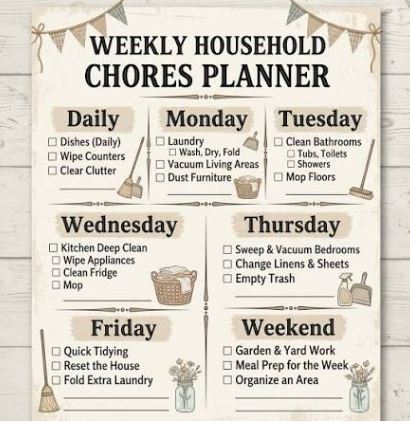
Combining meal planning and house chores into one weekly schedule can make your routine easier to manage. Instead of keeping separate lists for cooking, cleaning, laundry, and other household tasks, you can organize them around the same daily rhythm.
The goal is not to plan every minute. A good schedule gives you a clear structure while leaving enough flexibility for busy days, unexpected tasks, and changes in energy levels.
Why Combine Meals and Chores?
Meals and household chores are closely connected. Cooking creates dishes, food preparation creates counter and sink cleanup, and grocery shopping affects what you can prepare during the week.
Planning these tasks together helps you avoid unnecessary repetition and schedule chores when they make the most sense.
For example:
- Batch cooking creates cleanup: If you prepare several meals on Sunday, plan kitchen cleanup immediately afterward.
- Meal choices affect workload: A simple dinner on a busy evening leaves more time for laundry, tidying, or other chores.
- Grocery shopping supports meal planning: Buying ingredients for several planned meals reduces last-minute shopping trips.
- Leftovers reduce both cooking and cleanup: Preparing extra portions can give you an easier meal the following day.
Step-by-Step Guide to a Unified Plan
The objective is to create a practical weekly structure, not a rigid timetable. Start with the tasks that have to happen and build the rest around them.
1. Start With Your Fixed Commitments
Before planning meals or chores, mark the commitments that already determine your week.
Include:
- Work or school hours
- Appointments
- Exercise or other regular activities
- Grocery shopping
- Family commitments
- Days when you expect to be especially busy
This shows you where you have enough time for cooking and household tasks.
You can then assign simple themes to particular days. For example, Monday could be laundry day, Wednesday could be bathroom-cleaning day, and Sunday could be your main meal-preparation day.
2. Plan Your Meals First
Start by deciding what you will eat for the main meals of the week. You do not need to plan elaborate recipes for every day.
Consider your schedule and energy levels when choosing meals.
- Busy evenings: Choose meals that take 15–30 minutes to prepare.
- Less busy days: Reserve these for meals that require more preparation.
- Batch-cooking day: Prepare useful staples such as rice, beans, roasted vegetables, sauces, or cooked proteins.
- Leftover days: Use extra portions from earlier meals instead of cooking from scratch.
For example, if you know Tuesday will be particularly busy, plan a leftover meal or a simple stir-fry instead of a recipe that requires extensive preparation.

3. Match Chores to Your Meal Schedule
Once your meals are planned, place related chores around them.
Daily tasks can be attached to existing routines:
- Wipe kitchen counters after dinner.
- Load or unload the dishwasher before bed.
- Put food away immediately after meals.
- Sweep obvious crumbs after cooking.
Then assign larger chores to specific days.
For example:
| Day | Meal Focus | Chore Focus |
| Monday | Simple dinner | Laundry |
| Tuesday | Quick meal | Bathroom cleaning |
| Wednesday | Leftovers | Vacuuming |
| Thursday | Easy one-pan meal | Dusting and tidying |
| Friday | Flexible meal | Light cleanup |
This approach keeps larger chores from competing with your busiest cooking periods.
4. Plan Around the Kitchen
The kitchen usually creates the strongest connection between meals and chores.
If you are preparing several meals at once, plan the cleanup as part of the same block rather than treating it as a separate task later.
For example:
Sunday afternoon
- Wash and chop vegetables
- Cook grains or beans
- Prepare a sauce
- Portion meals
- Wash cooking equipment
- Wipe counters and clean the stovetop
You can also reduce repeated cleanup by grouping similar preparation tasks. If several meals use chopped vegetables, prepare them together rather than washing and cutting the same ingredients on multiple days.
5. Group Similar Chores
Grouping related tasks can make the weekly schedule easier to follow.
For example:
- Laundry: Monday and Saturday
- Bathrooms: Tuesday
- Dusting: Thursday
- Vacuuming: Wednesday and Saturday
- Kitchen deep clean: Sunday
- General tidying: 10–15 minutes each evening
The exact days do not matter as much as choosing a pattern that fits your household.
6. Leave Room for Unexpected Tasks
Avoid filling every part of your schedule.
Leave a few flexible periods during the week for tasks that take longer than expected, unexpected errands, or chores that you did not get to earlier.
A 20–30 minute buffer can prevent one delayed task from disrupting the rest of the day’s schedule.
7. Review the Schedule Each Week
Set aside about 10 minutes at the end of the week to review your plan.
Ask yourself:
- Which meals took too long to prepare?
- Which ingredients were left unused?
- Which chores kept getting postponed?
- Did you schedule too many demanding tasks on the same day?
- What can you prepare in advance next week?
Use these answers to adjust the following week’s schedule instead of trying to follow an unrealistic routine.
A Simple Weekly Planning Checklist
Use this checklist when creating your schedule:
- Add fixed appointments and commitments.
- Plan your meals for the week.
- Identify meals that can provide leftovers.
- Set aside time for batch cooking or meal preparation.
- Schedule your grocery shopping.
- Assign recurring household chores.
- Pair heavier chores with simpler meal days.
- Include daily kitchen cleanup.
- Leave 20–30 minutes of buffer time where possible.
- Review the schedule at the end of the week.
Rules for Keeping the Routine Manageable
Keep Daily Chores Short
Small daily tasks are easier to maintain than allowing dishes, laundry, and clutter to accumulate until they require a large cleanup session.
A 10-minute kitchen reset each evening can be enough to keep the space manageable between deeper cleaning days.
Make Busy Days Easier
Your schedule should reflect your actual week. If Wednesday is consistently hectic, make Wednesday a leftover or quick-meal day and avoid assigning several demanding chores to it.
Repeat Meals When It Helps
You do not need a completely different dinner every night. Reusing prepared ingredients or eating leftovers can reduce cooking time, food waste, and cleanup.
Adjust Instead of Abandoning the Plan
Missing one chore or changing one meal does not mean the schedule has failed. Move the task to the next suitable time and continue with the rest of the plan.
Final Takeaway
A weekly meal and chore schedule works best when the two areas are planned together. Start with your fixed commitments, plan meals around your busiest and least busy days, connect kitchen cleanup to cooking, and distribute larger chores throughout the week.
Keep the structure simple and leave room for changes. The goal is to make your household routine easier to follow, not to create another list you have to keep up with.
The information provided on this blog is not intended to be medical advice and should not be relied upon as such.If you have any medical concerns, please consult with a qualified healthcare professional. We are not responsible for any harm or injury caused by reliance on the information provided.