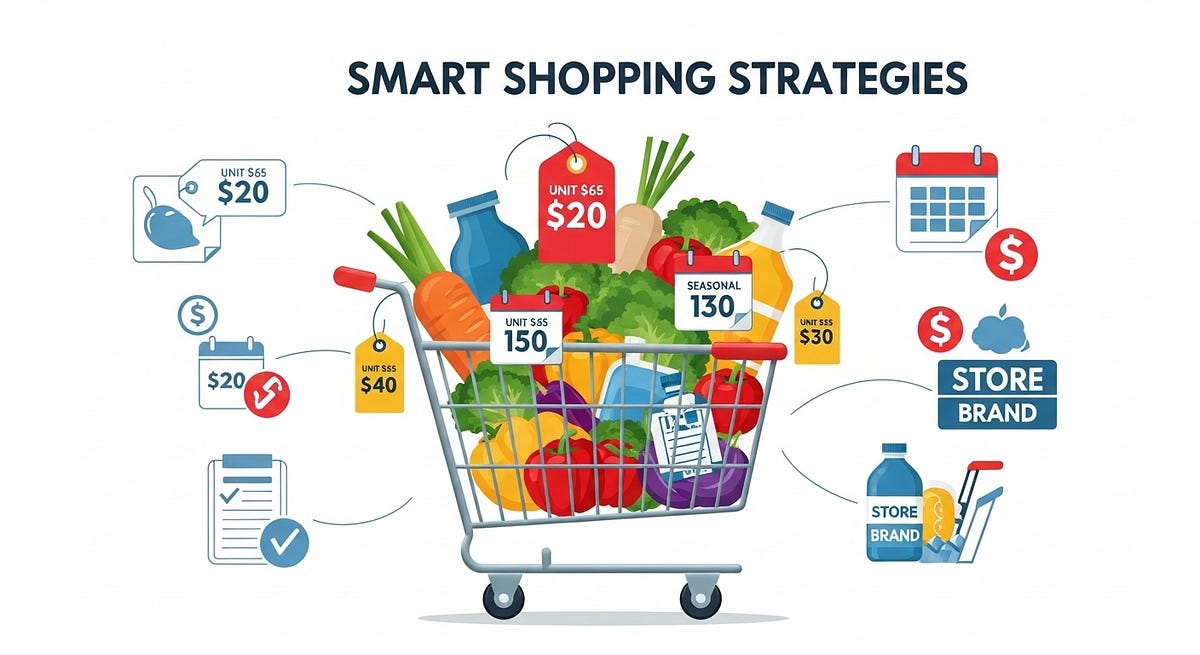
Grocery shopping is one of the household expenses where small decisions add up quickly. Buying ingredients you already have, choosing convenience products, purchasing more than you can use, or overlooking unit prices can quietly push a weekly grocery bill above budget.
Saving money on food does not mean choosing the cheapest product every time. A better approach is to plan meals around what you already have, compare prices properly, buy foods you are likely to use, and reduce waste. These habits can lower grocery spending while still leaving room for nutritious and enjoyable meals.
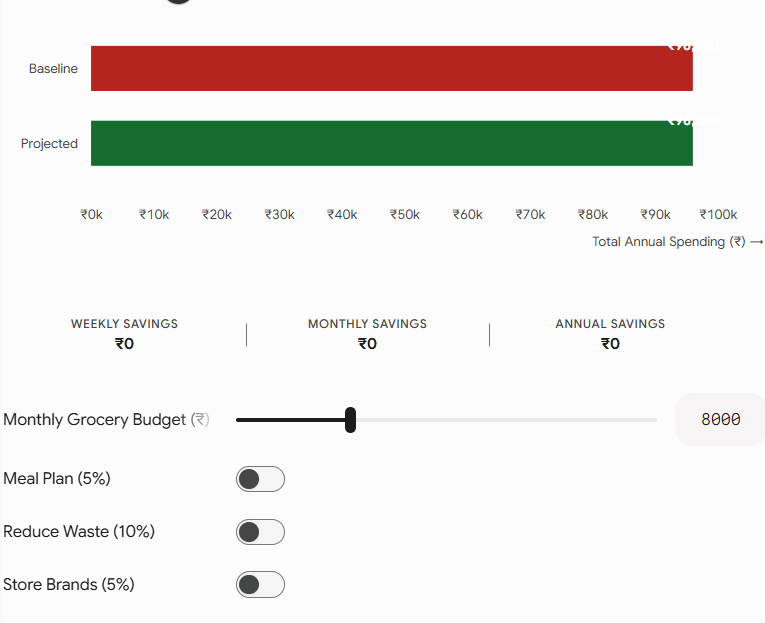
Interactive Grocery Savings Estimator
Adjust the parameters below to estimate how changes such as meal planning, reducing food waste, buying seasonal produce, and choosing store brands could affect your annual grocery spending.
1. Start With a Pantry-First Meal Plan
Before planning what to buy, check what is already in your kitchen. Your pantry, refrigerator, and freezer can provide the starting point for several meals and help prevent duplicate purchases.
Audit Your Food Before Shopping
Check ingredients that are already open or approaching their use-by or best-before dates. Build a few meals around those foods before adding more items to your shopping list.
For example, leftover vegetables can become a stir-fry, soup, omelet, or grain bowl. Cooked chicken can be used in sandwiches, wraps, salads, or rice dishes.
Plan Meals Around Shared Ingredients
Choose meals that use some of the same ingredients without making every meal identical.
A bunch of spinach, for example, can be used in an omelet, dal, pasta, or a side dish. A batch of cooked beans can work in tacos, salads, soups, or rice bowls.
This approach helps you use ingredients completely instead of buying a different set of ingredients for every recipe.
Keep One Flexible Meal Each Week
Reserve one meal for ingredients that need to be used soon. Frittatas, stir-fries, curries, soups, fried rice, and grain bowls work well because they can accommodate a variety of vegetables and proteins.
The goal is not to use every leftover ingredient in one meal. It is to give foods you already purchased a planned place on the menu.
2. Compare Unit Prices, Not Just Package Prices
The largest package is not automatically the best deal. A smaller package can sometimes have a lower unit price, particularly when a product is on promotion.
Look at the unit price displayed on the shelf label or product page. Depending on the store, this may show the price per 100 grams, kilogram, litre, ounce, or individual item.
For example, a ₹180 package containing 500 grams costs ₹36 per 100 grams. A ₹300 package containing 1 kilogram costs ₹30 per 100 grams. The larger package has the lower unit price, provided you will actually use it.
Compare Store Brands Carefully
Store brands can cost less than national or premium brands, particularly for everyday staples such as grains, canned foods, frozen vegetables, and basic pantry ingredients.
However, price should not be the only comparison. Check the ingredient list, quantity, nutritional information, and product quality. If two products meet your needs, the lower-priced option can provide an easy saving.
You do not need to replace every branded product. Keep paying more when you have a specific preference for taste, ingredients, quality, or performance.
Check Whether a Sale Is Actually a Saving
A discount is useful only when the final unit price is lower and you would have bought the product anyway.
Before purchasing a multi-buy offer, compare the promotional price with the regular price of the same product and similar alternatives. Also check whether the offer requires a membership, minimum quantity, or other condition.
3. Be Strategic With Protein and Produce
Some grocery categories can take up a significant share of a food budget, particularly meat, seafood, dairy, specialty products, and out-of-season produce. A few changes can reduce costs without eliminating these foods.
Use Frozen Produce When It Makes Sense
Frozen fruits and vegetables can be practical alternatives when fresh produce is expensive, unavailable, or likely to go unused.
Frozen vegetables are particularly useful for soups, curries, stir-fries, pasta, and other cooked dishes. They also reduce the pressure to use fresh produce within a short window.
Choose fresh produce when you prefer its texture or when it is reasonably priced and you know you will use it.
Buy Less-Processed Cuts When You Have Time to Prepare Them
Pre-cut vegetables, individually portioned foods, marinated products, and other convenience items often cost more than comparable basic ingredients.
If you have the time and equipment, buying a larger unprocessed cut and portioning it yourself can reduce the cost per serving.
But do not buy a larger quantity simply because the price per kilogram is lower. The saving disappears if the food goes unused.
Include Affordable Protein Options
Beans, lentils, chickpeas, eggs, tofu, and other plant-based proteins can provide lower-cost alternatives to some meat and seafood meals.
You do not have to eliminate animal protein. Instead, rotate different protein sources throughout the week. For example, you might have lentil curry one night, eggs another day, and chicken or fish on another.
This also gives you more flexibility when prices change from week to week.
4. Build a Grocery Shopping Workflow
A consistent shopping process makes it easier to control spending.
1. Check Your Pantry and Freezer
Spend a few minutes checking what you already have before writing your list.
Look for:
- Ingredients that need to be used soon
- Open packages
- Frozen foods you have forgotten about
- Duplicate staples
- Items you regularly buy but already have enough of
2. Make a Focused Shopping List
Organize your list by category rather than walking through the store and deciding what to buy as you go.
A basic list might include:
| Category | Examples |
| Protein | Eggs, lentils, beans, tofu, chicken, fish |
| Produce | Seasonal vegetables, fruit, leafy greens |
| Staples | Rice, oats, bread, pasta, flour |
| Pantry | Canned foods, spices, cooking oil |
| Dairy | Milk, yogurt, cheese |
| Freezer | Frozen vegetables, fruit, or planned convenience foods |
| Extras | Snacks, treats, beverages |
Leave room for one or two flexible items if your budget allows. A grocery list should guide your spending, not make every purchase unnecessarily rigid.
3. Watch Your Cart Total
If you shop online, use the running cart total to remove items that are not essential before checkout.
In a physical store, keep a rough running total as you shop. This makes it easier to spot when several small additions are pushing you beyond your planned budget.
4. Store Food Properly When You Get Home
Good storage helps protect the money you have already spent.
Different foods require different storage conditions, so follow the storage guidance on the packaging where applicable. Refrigerate foods that require refrigeration promptly, keep dry goods in suitable containers, and freeze foods you will not use within their expected storage period.
Do not automatically wash every fruit or vegetable before storing it. Some produce keeps better when washed shortly before use. Berries, for example, are often better kept unwashed until you are ready to eat them.
Comparing Grocery Shopping Channels
Different shopping methods can work for different budgets and shopping habits.
| Shopping Channel | Useful For | Potential Budget Advantage | Things to Watch |
| Store Pickup / Delivery | Planned weekly shopping | Makes the full cart total visible before checkout and can reduce browsing | Delivery fees, service charges, minimum-order requirements, or item-price differences |
| Discount Grocers | Everyday staples and basic ingredients | Often offer competitive prices on private-label products | Smaller selection and fewer specialty products |
| Wholesale Clubs | Frequently used bulk items | Lower unit prices can make sense for products you use regularly | Membership fees, high upfront spending, and excess food |
| Local Markets | Seasonal produce and frequently purchased fresh foods | Seasonal products can sometimes offer good value | Prices and selection vary by location and season |
| Store Pickup / Delivery | Planned weekly shopping | Makes the full cart total visible before checkout and can reduce browsing | Delivery fees, service charges, minimum-order requirements, or item-price differences |
| Discount Grocers | Everyday staples and basic ingredients | Often offer competitive prices on private-label products | Smaller selection and fewer specialty products |
The cheapest shopping channel is not necessarily the one with the lowest shelf price. Consider transportation, membership fees, delivery charges, package sizes, and how much of the food you will actually use.
5. Reduce Food Waste Before Cutting Food Quality
One of the simplest ways to lower grocery spending is to get more use from the food you already purchase.
Try these habits:
- Freeze bread, meat, herbs, or other suitable foods before they go unused.
- Store produce according to its storage requirements.
- Keep older items visible so they are not forgotten behind newer purchases.
- Repurpose leftovers into lunches or another planned meal.
- Avoid buying large quantities of unfamiliar foods simply because they are discounted.
- Check your freezer regularly instead of treating it as long-term storage for forgotten food.
- Plan one meal each week around ingredients that need to be used.
A lower grocery bill is not much of a saving if part of the shopping ends up in the bin.
6. Buy in Bulk Selectively
Bulk shopping can reduce the unit price of some products, but only when the larger quantity fits your actual consumption.
Bulk buying generally makes more sense for foods that:
- You use regularly
- Store well
- Have a long shelf life
- Do not require excessive storage space
Rice, oats, dried beans, household staples, and some frozen foods may work well for bulk purchasing.
Perishable foods require more caution. Buying five times as much fresh produce because it is cheaper per kilogram is not a saving if you cannot finish it before it deteriorates.
7. Treat Grocery Promotions as a Tool, Not a Shopping List
Promotions can reduce costs, but they can also encourage purchases you did not plan to make.
Before adding a discounted product to your cart, ask:
- Would I buy this at its regular price?
- Do I already have enough at home?
- Will I use it before it expires or loses quality?
- Is the discounted unit price actually lower than comparable products?
- Does the offer require buying more than I need?
If the answer to several of these questions is no, leave it behind.
3 Rules to Keep Grocery Spending Under Control
1. Keep a Short Price List
Track the usual prices of around 10 frequently purchased items, such as eggs, rice, oats, cooking oil, milk, or coffee.
You do not need to record every grocery item. A small list of regular purchases is enough to help you recognize when a promotion is genuinely useful.
2. Schedule a Pantry and Freezer Review
Once a month, check your pantry and freezer before creating a new shopping list.
Look for ingredients that have been sitting unused and build a few meals around them. This is also a good time to identify products you keep buying but rarely finish.
3. Give Every Purchase a Purpose
Before buying an expensive ingredient, bulk package, or promotional item, know when and how you will use it.
A useful grocery budget is not simply about spending less at checkout. It is about getting more meals and more value from what you buy.
Make Your Grocery Budget Work Harder
A quality-focused grocery budget does not require choosing the cheapest item in every aisle. It requires being selective about where your money goes.
Plan around the food you already have, compare unit prices, choose seasonal or frozen options when appropriate, buy bulk quantities only when you can use them, and reduce the amount of food that goes unused.
The result is a grocery routine that is easier to control without turning every shopping trip into a search for the lowest possible price. Spend deliberately on the foods you enjoy and use regularly, and let better planning take care of the rest.
The information provided on this blog is not intended to be medical advice and should not be relied upon as such.If you have any medical concerns, please consult with a qualified healthcare professional. We are not responsible for any harm or injury caused by reliance on the information provided.